Why IT Event Management needs a rethink
The IT landscape in enterprises today is complex, hybrid and dynamic and the complexity is also increasing rapidly due to increased containerization, microservice-based apps, and the overall scale of digital operations.
So far, most enterprises have tried to tackle this with different monitoring tools to get more details into the state of operations, backed by command center teams who ‘catch-and-dispatch’ valid alerts from the noise, often using ITSM tools or rule-based event management workflows to aid them.
But this ‘traditional event management’ process has an expiry date, one which most organizations have possibly already crossed.
This is where Agentic AI comes in, where systems don’t just respond to alerts but perceive, reason, and act on them independently, all while learning continuously from outcomes. Agentic AI brings together intelligence and automation to reshape how work gets done and moves IT event management beyond reactive processes to proactive, adaptive, and autonomous operations. Curious about how Agentic AI is redefining IT Operations? Read more here.
In this blog post, we will explore the challenges that traditional event management processes face and how AI Agents are transforming IT Event Management by proactively detecting, grouping and predicting events at scale.
This is the first of a three-part series where we explore the need and advantages of AI Agents for IT Event Management, Incident Resolution and Proactive Problem Management.
Challenges in traditional IT Event Management
For Site Reliability Engineers (SREs) and IT Operations (ITOps) teams, ensuring service reliability and avoiding operational overload is mission critical. However, in practice, most large enterprises receive tens of thousands of alerts from their IT layers every year. Most of these alerts are irrelevant, duplicate, or low priority. The issue is not just the volume of alerts, but also the lack of clear context and associated information regarding the alert (e.g., criticality, impact, type, current status, dependencies). As a result, the alerts end up as overwhelming noise, severely impacting the effectiveness of ITOps teams. Some typical challenges faced include:
- Alert fatigue from too many irrelevant or duplicate notifications
- Risk of missing genuine alerts, leading to business disruption
- Wasted efforts in chasing false positives or manually closing irrelevant alerts
- Siloed, team-centric visibility, causing redundant efforts
- Manual detection, processing, and communication, slowing down response
This is where modern IT Event Management or Event Intelligence Solutions (EIS) come in. These tools apply artificial intelligence (AI) and machine learning to augment, accelerate, and automate responses to events detected from digital services, helping organizations reduce alert noise and get meaningful information from alerts.
While modern IT Event Management tools offer several advantages over traditional systems, these tools still have room for improvement:
- Most data-driven tools stop at statistical observations. They require human expertise and agency to leverage these observations into actionable recommendations for effective event management.
- The business and technology landscapes continuously evolve. Most data-driven solutions fail to adapt to this change, making them irrelevant and ineffective over time.
- Most solutions require complete consistent data across the technology stack. However, in practice, data quality is often a suspect, making these solutions ineffective.
- Existing solutions rely on data-driven insights and fail to capture tacit knowledge of a domain collected over years of experience.
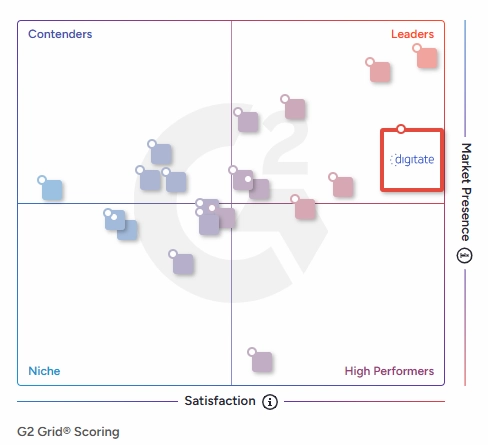
Fortunately, with the rise of LLMs and Agentic Architecture, there exists a perfect solution to these problems, and industry-leading Event Management solutions like Digitate’s ignio platform are taking a lead in bringing these technologies to practical applications.
ignio has the additional advantage of being built on an agentic framework since inception, and complemented by in-built automation and observability capabilities, which we will explore in later sections. But first let’s understand what AI Agent means in the context IT Event Management.
What is an AI Agent for IT Event Management?
An AI Agent for IT Event Management leverages an agentic approach to provide a closed-loop approach to IT Event Management. Simply put, it’s a system that can independently perceive, reason, act, and learn, leveraging multiple dedicated agents, data stores and tools, and orchestrating them into a unified flow.
Unlike previous systems, AI Agents can autonomously take care of the majority of common IT events at the back end, and at the same time provide conversational intelligence at the front end to have meaningful exchange of information with human experts.
Digitate’s ignio is the prime example, leveraging key technologies to power various capabilities:
- Patented machine learning and artificial intelligence algorithms for dynamic behaviour profiling, anomaly detection, and prediction
- Large Language Models (LLMs) for gathering information from large unstructured data, or for summarizations of natural language conversations
- In-built automations to process alerts and trigger notifications
- Agentic orchestration to trigger the right agents and workflows, leverage the right internal toolsets or datastores
How ignio AI Agent for IT Event Management works
When an event occurs, ignio AI Agent for IT Event Management orchestrates a series of intelligent activities through its specialized agents. Each agent plays a distinct role, working together like members of a well-coordinated team:
Perception Agents: These agents are the observers. They establish what “normal” looks like by baselining system behavior. They set thresholds to suppress unnecessary alerts, uncover patterns by analyzing how alerts occur together across time and systems (spatio-temporal correlations), study the impact of past alerts, and build prediction models to anticipate future alerts.
Reasoning Agents: These agents are the decision-makers. They use models created by Perception Agents to separate legitimate alerts from noise, decide which alerts should be filtered, suppressed, or grouped together, assign priority levels based on impact, and use predictive insights to forecast future alerts.
Action Agents: These agents execute the decisions made by reasoning agents. They filter and suppress false or irrelevant alerts; group related alerts into meaningful clusters and generate notifications for predicted future alerts.
Learning Agents: These agents ensure the system never stands still. They continuously adapt models and patterns as system behavior changes and as new feedback comes in from users. This constant learning keeps the AI Agent relevant and effective over time.
Internal Control Agents: These agents act as the guardians of responsible AI. They ensure that rules for filtering, suppression, and correlation are accurate, statistically strong, and reliable. They validate that prediction models are robust and that the underlying data is up-to-date, unbiased, and trustworthy.
External Augmentation Agents: These agents bring in the human perspective. They take direct feedback from users to fine-tune thresholds, suppression rules, and aggregation patterns, and provide a conversational interface for SREs and ITOps to query and interact with event data.
Together, these agents allow the AI Agent for IT Event Management to do much more than “manage alerts.” It perceives, reasons, acts, learns, and adapts—delivering a level of intelligence and agility that traditional event management tools simply cannot match.
How ignio AI Agent for IT Event Management helps IT teams: Real-world use cases
ignio AI Agent for IT Event Management has been purpose-built to aid both command center teams and SRE teams in a variety of tasks. Here are some use cases where the AI Agent improves the day in the life of command center and SRE teams.
Use Case 1: Automate noise reduction
Alert noise is the primary challenge command center teams face due to the sheer volume of non-useful alerts that need to be manually checked and closed. Command center can enable ignio AI Agent to autonomously take care of this by:
- Filtering out unwanted alerts: The AI Agent filters out unwanted noise like maintenance alerts, flapping alerts etc., leveraging contextual knowledge and perception ability.
- Analysis of normal behavior and dynamic thresholds: The AI Agent analyzes historical behavior of metrics such as response time, throughput, and resource utilizations to profile normal behavior ranges, and use this insight to set dynamic thresholds.
- False alert suppression: The AI Agent using dynamic thresholds and reasoning capabilities.
- Alert de-duplication: Alerts from multiple monitoring tools and alert workflows are de-duplicated by the AI Agent.
The command center teams can keep regular checks on the progress of these tasks by using the conversational interface, make necessary adjustments and refinements, or validate/edit thresholds to keep results accurate.
Use Case 2: Alert storm management (Alert grouping)
Often command center teams must deal with alert storms – a huge volume of alerts coming from different tools and different IT components due to a single incident at a key node. As a result, the manual workload increases, making it difficult to triage and prioritize resolutions. The AI Agent can help command center teams deal with alert storm by smart correlation and aggregation:
- Model-based and case-based reasoning: ignio AI Agent understands the relationship between different alerts (from same source or diverse sources) based on their frequency, dependencies or historical patterns using powerful AI/ML models.
- Aggregation and correlation: ignio aggregates similar or repeated alerts, and correlates different-but-related alerts, using the above reasoning.
- Alert grouping: ignio AI Agent then groups related alerts, and surfaces the right alerts for resolutions, from an alert storm.
Command center teams and SRE teams can examine the detailed explainability of the alert groupings and help refine the output of the AI Agent by validating the AI-surfaced patterns, as well as apply their tacit knowledge to improve the grouping and labeling of related events.
Use Case 3: Alert predictions
The move to proactive operations necessitates the need-to-know critical alerts beforehand. Command center teams can leverage the ignio AI Agent to predict and forecast events to help plan for situations as well as proactively take steps to resolve issues.
These alerts may be based on multiple models like seasonal patterns (e.g. peak-season), behavior trends (memory alerts every Sunday night), real-time trends (like sudden surge in CPU utilization) or based on known sequence (e.g. reduced disk space after an increase in API calls for an application)
Use Case 4: Continuous improvement of signal-to-noise ratio
A key role SRE and command center teams play is in systematically improving alert management to improve the signal-to-noise ratio. This requires continuous analysis of alerts to find improvement opportunities – a task that can be daunting. ignio AI Agent can help IT teams by:
- Identifying alerts that never lead to incidents: ignio AI Agent for IT Event Management can find patterns for alerts that have not been actioned. ignio can also automatically mine suppression patterns from the work notes of past events, using AI-based algorithms and semantic search.
- Identifying ‘aged events’ which do not need a resolution.
- Continually deriving dynamic thresholds: ignio leverages incoming data to continually learn and modify thresholds, which can be validated by experts and help improve suppression.
Benefits of using AI Agents in IT teams
With AI Agent for IT Event Management, SRE and ITOps teams move from reactive firefighting to proactive issue detection and continuous improvement.
- Reduced alert noise: Suppress, filter and group alerts, surfacing only what matters.
- Improved efficiency: Generate the right events at the right time and reduce MTTD with better intelligence.
- Better team productivity: Reduce alert fatigue, cut down manual toil and eyes-on-screen, reducing wasted efforts. Also, lowers overall stress, low-value tasks and cognitive load, improving work satisfaction.
- Improved reliability and proactiveness: Predicted disruptions are addressed before they impact customers, and overall observability and explainability increases.
- Continuous learning and improvement: With AI Agents, teams can ensure continuous improvement and adaptation to dynamic systems.
In short, the AI Agent transforms event management with collaborative, intelligent partnerships with SREs and ITOps helping them ensure service reliability while reducing overload.
ignio: A step toward the autonomous enterprise
The AI Agent for IT Event Management is more than just a smarter way to manage alerts. It’s a building block for the autonomous enterprise. By orchestrating perception, reasoning, action, and learning in real-time, the AI Agent demonstrates how IT operations can evolve from rule-based monitoring into self-managing, adaptive systems.
It is also a part of the entire agentic ecosystem connecting with other AI Agents for incident resolution, incident prevention and elimination when required, ensuring closed-loop operations.
As enterprises embrace the shift to autonomous operations, they move closer to a future where operational intelligence is not only automated but also autonomous where systems don’t just notify teams about issues, but actively prevent them, enabling humans to focus on innovation instead of firefighting.
Ready to transform your IT operations? Schedule a demo with us today.