Setting a good example in your own operations helps
Previously, I discussed the challenges of adopting AI in enterprises, focusing on middle managers’ concerns about its impact on their roles. In case you missed it, you can read it here: AI resistance isn’t where you expect it
In this post, I’ll highlight the crucial steps for ensuring successful AI adoption. All business transformations are complex by nature because they change the organizational balance – that is, the equilibrium of power held among different leaders. The team or function leading the transformation needs to be perceived as a trusted partner, not as a force that will upset the apple cart.
This is doubly true when the transformation in question involves artificial intelligence (AI). From IT’s perspective, any new AI software faces hurdles of installation and trust, like any other technology. But to drive adoption, IT needs to be trusted by end users as well as management, because AI involves not merely a routine installation, but a radical shift in how people do things.
For example, imagine how an accounts payable team might feel and react when all their old tasks are replaced by an AI-driven solution. If a trustworthy relationship has not been established, AI programs will be stalled by resistance fueled by fear of losing jobs, status, power, or relevance. Only a trust-based relationship between staff and management can facilitate and expedite difficult discussions about their future.
The IT organization’s courage paradigm
In today’s world, the ability to quickly adopt innovation is what drives value and growth. However, many IT organizations struggle to be recognized as drivers of change. Instead, they’re often seen as a support function, which can limit their potential to truly transform the business.
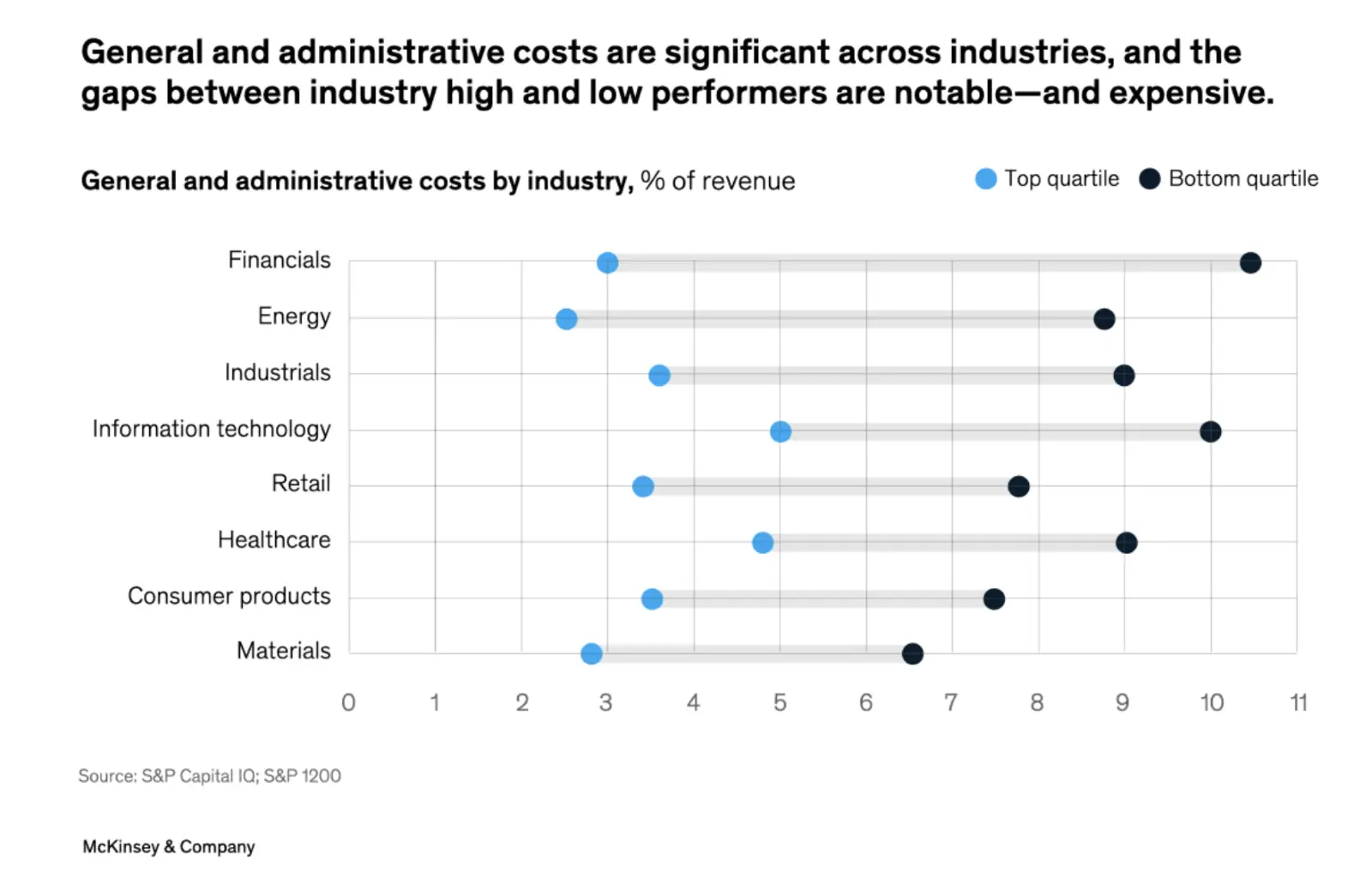
Part of this perception stems from how IT is represented on the balance sheet. Typically, IT falls under “general and administrative expenses,” which positions it alongside fixed costs like rent, insurance, and taxes. This creates the impression that IT is just another expense to be managed or minimized, rather than a key driver of innovation and value creation.
Unlike investments in manufacturing equipment or raw materials, IT doesn’t always have a direct, visible impact on revenue generation. To change this perception, IT departments have an opportunity to reposition themselves as trusted partners in transformation by focusing on two key areas:
- Driving initiatives that have a positive impact on business
- Elevating IT’s role within the organization
Driving initiatives that have a positive impact on business
According to a McKinsey study conducted in 2023, general and administrative costs are significant costs. As a step towards making a positive impact on business, IT’s focus must be on optimizing these costs, which in turn can gain IT a lot of credibility.
Elevating IT’s role within the organization
As IT demonstrates its abilities in optimizing costs, the goal is to get recognized as a trusted and efficient technical advisor, and over time, as a strategic contributor to revenue growth.
How can Digitate help IT transformation through AI adoption?
ignio™, Digitate’s SaaS based platform for autonomous operations enables IT to meet business transformation goals and the courage to take the lead in AI adoption. Digitate empowers IT to establish itself as a trusted partner in AI transformation, driving its adoption across functions:
- Operational control: IT gains operational control, consistently meeting Service Level Agreements (SLAs) and managing critical business processes without recurring issues. This provides a solid foundation for scaling AI-driven improvements.
- Proactive budget management: By proactively managing its budget, IT ensures predictable costs, eliminating budget surprises for the CFO.
- Leading by example: IT should lead its own AI transformation, demonstrating success with clear metrics. This includes meeting KPIs such as improvements in Mean Time to Recover (MTTR), incident reduction, and cost management.
The bottom line
Trust is the true driver of AI transformation, not technology. Often, what slows down technology adoption is the lack of courage within an organization. IT departments must have the confidence to use AI to transform their own operations—automating repetitive tasks and empowering their teams to deliver greater business value.
AI, often misunderstood as diminishing human control, actually places a unique human quality back at the center: the ability to improve through awareness of context.
For more information on how Digitate can help redefine your IT operations with AI and automation, visit Digitate’s AIOps page here.
Get in touch to discuss how ignio can drive your IT AI transformation.