

Tom Stoneman: Hi, I’m Tom Stoneman, and this is The Intelligent Enterprise, where every two weeks we take a break from the chaos of enterprise life and get inside a big idea, by getting outside of it.
Each episode we meet an industry expert who helps cut through the noise from all the updates and rollouts, while exploring one of their favorite break time activities.
It might be over a coffee, a workout, or even a game of ping pong – something that gives them some headspace when they’re deep in a problem.
Today I’m joined by Ash Ashutosh, CEO of Pinecone and a three-time founder with nearly thirty years of experience building data infrastructure companies. Ash has spent his career thinking about how technology evolves from novelty, to ubiquity, and finally to invisibility. For most of his life, Ash has been chasing a kind of success most of us probably never think about.
Ash Ashutosh: Oh, how does it work?” “Nobody knows. Nobody knows how it works.” And, uh, that’s the beauty of engineering. Engineering that truly becomes an embedded part of how we live,
Tom Stoneman: That lens turns out to be exactly right for understanding what Pinecone does, and where it’s heading next.
Ash Ashutosh: I’m sure in the back of your mind, there were so many things you thought about and you were stopped by, “Well, the technology cannot do it.”
Well, now it can.
Tom Stoneman: Let’s get inside the future of enterprises… by stepping outside of them.
Tom Stoneman: Every major technology shift needs new infrastructure. The internet needed cloud storage. Mobile needed app stores. AI needed a way to store and search not just data, but meaning. That’s the problem Pinecone set out to solve, and for years, it’s been the vector database powering some of the most sophisticated AI applications in the world. Now, a new kind of user has arrived: the AI agent. So in my conversation with Ash, my first question was — how does the infrastructure of AI evolve when the user is no longer human?
Ash Ashutosh: the conventional stack, you know, we had an application, and there’s an operating system, and there’s a disk drive or some place to store blocks of data, some place where applications can get all the services they need, and then there are the applications themselves.
Now, in the AI world, you have a similar analogy. Um, the first version, uh, the application was a chatbot, a human being who used a chatbot. Then you had LLMs as the new operating system. And now you needed a place where these LLMs got your data. And that was the, the foundation of where, where Pinecone was.
It was, it was a fundamental store for vectors, which is the core language of how AI works. AI doesn’t know how to deal with blocks of data. AI doesn’t know how to deal with, uh- A database. What it does know is, is vectors. And Pinecone pioneered the whole idea of building a database for vectors to manage them and to deliver them very efficiently.
So for years, ever since, OpenAI announced ChatGPT, everybody was fascinated with building chatbots, humans were the users, and that’s a stack, uh, that has gone on for several years.
Now, somewhere along the way, about, uh, say September, October of last year, we noticed, uh, we had a new user who started showing up and actually consuming a lot of our APIs. And, uh, this user was called an agent. Agentic AI finally hit the shores and hit it big time. And the difference was you had a human being who would speak in a natural human language, chat away on a chatbot, get a beautiful response in a language that a human understood, which is– could be a text, could be music, could be picture, but you conversed in a way that humans understood.
we saw that this new user operates differently. These agents are supposed to get a task done. They don’t respond to an answer. They go off and book your ticket in the favorite music festival, festival you want to attend,
It goes out and does work for you. It goes out and does a task for you.
and now it needs to pretend like it’s a human being because That’s the language that the underlying infrastructure spoke.
And so We spent a couple of months trying to figure out, you know, who this new user is and what’s the most efficient way of, uh, really serving this.
And we announced a product called Pinecone Nexus, which is a knowledge engine, not a vector database, but a knowledge engine designed expressly for agents and speaks a language only agents can understand, not human beings, because you don’t need a human language for a machine to communicate with another machine.
So this was, part of a big launch that we did among five different products we released. that align with how the, the world is moving towards an agentic AI.
So here you have a different stack. Remember, the old stack was a human being with a chatbot, with an LLM and Pinecone vector database. That was a stack for humans as users. The new one is a human being, and the agent is the application, not a chatbot anymore. There is an LLM sitting on the side, but this agent requires knowledge.
Not vectors, but knowledge.
Tom Stoneman: That is, that’s fascinating.
uh, you’ve got a lot of people using your product. And I, I’m, I’m not sure if you’re able to do this, but if you’re able to, uh, talk about, uh, y- you know, one that you think is particularly interesting that, uh, has been using, using Pinecone or, uh, did something spectacular to kind of improve their, their infrastructure or their database.
Ash Ashutosh: probably the most interesting one that we just did a case study on was, uh, a small startup that was trying to provide, uh, very innovative recipes.
And turns out, uh, cooking is not a science, it is an art. It’s not precise adding exactly these, uh, uh, these ingredients and this, these kind of proportions. There’s a little more to it, and that, that’s what makes it each, each special. And that’s where semantic context matters, not just… It’s not a algorithm.
Otherwise, you know, robots would be running a, a phenomenal kitchen or restaurant. So this, this small group of people, uh, built around Pinecone and just changed the way they come out with, uh, uh, how their, how their audience truly receives a very different kind of experience about- You know, sometimes you may, you may want a little less spice, and sometimes, you know, the same recipe might come out slightly differently depending on…
That’s how it works. That’s how, you know, cooking normally works. That’s o- on one side. On the other side, you got some of the largest enterprises. One of the largest drug discovery companies, uh, uses Pinecone to help their internal scientists do a lot more research much more effectively across a broad corpus of knowledge, which is impossible to try to figure out.
If you are, if you are a scientist and you’re trying to work on a specific topic, there’s just so much information out there. But I want it relevant, and I want it semantically relevant, not just precisely relevant. I just want to know if I’m looking for this, this particular component, this particular chemical, don’t just tell me about that one.
Tell me about everything like it and things around it, and give me the context. That makes me much more productive. So there are drug discovery companies, there are media companies that use Pinecone to better deliver the right kind of content depending on who the user is and what their preferences are.
It precisely knows who Tom is. And not only does it know who Tom is, it also knows Tom’s profile and understands a little better about people like Tom, how would they respond to various kinds of things.
Sothere’s a wide variety of use cases.
Tom Stoneman: I have, I have a question for you about, uh, kind of your vision of how this, the way things are, are going that direction.
Ash Ashutosh: Mm-hmm.
Tom Stoneman: the most powerful tool ever known, known to man, I, I believe. Um, and the temptation, like I said, is to use it to build things faster, get things done less expensively or be able to get twice as much done rather than what could we do better?
How can we use creativity, mindfulness, and innovation? And then how can we plug context? How can we plug all of this context from my personal views, everything f- to the company culture, to our customers? How do we plug all that in and make all that work, in a system that’s changing by the minute, right?
So How do you see this, this all playing out, uh, with AI systems and, and how do we stay grounded knowing all this is happening without, uh, I mean, in, in a lot of cases for me, panic setting in, right?
Ash Ashutosh: Mm-mm.
experience can either be a liability because you do not want to learn anything new, or it can be an asset because you want to leverage it to learn something new.
And depending on, uh, how they perceive, uh, their life, their world. A lot of people are very good at wanting to, you know, figure out, uh, what else comes next, But even more people are probably worried that you spend, you know, a lifetime trying to build an experience.
You want to leverage it for your next stage, and you find fundamentally that whole thing has become a liability because you cannot just replay the, the same playbook you have been doing for a long time. You have to come back and keep your mind open. I believe in the former, and which is why, you know, I’ve, I’ve been a founder in three companies, which is why I came to Pinecone to fundamentally go change the opportunity for people to leverage their experience as an asset and allow them to go back and do things that they probably thought was not possible before.
And I can give you some examples, right? What AI has allowed us all to do is, uh, lower the cost of building new things. So you feel like, “Wow, here’s, here’s somebody new who’s never done something, and they are– they’re generating amazing music. It used to take me so long, and they would just express it, and music comes out.”
But AI isn’t just about building. It’s about other things. It’s about trust. It’s about authenticity. we’ve all been pretty impressed with the, you know, big language models. LLMs comes, come out with all kinds of, you know, one trillion parameters and soon unlimited, you know, token context windows.
But we also know that a lot of it comes out as garbage. So having a, a young teenager who’s a child prodigy suddenly doesn’t make the CEO of, uh, a large financial services company obsolete unless they choose to say, “This is what I’ve been doing for the last thirty-five years, and that’s what I’m gonna do for the next thirty-five.”
In that case, yes, it does make it obsolete.And many of us have gone through two or three iterations of that throughout our life. We probably haven’t gone through the speed at which this is happening now.
And sometimes you start to think about whether, whether it’s almost, uh, exhausting trying to adapt as fast as AI is requiring us to do so. But I love this thing. I love that there is something new to learn. There is an opportunity to solve problems that weren’t possible before. So now you get to the point of can your experience be translated into creativity where you solve problems that you did not think was possible to solve before? But I’m sure in the back of your mind, there were so many things you thought about and you were stopped by, “Well, the technology cannot do it.”
Well, now it can.
Tom Stoneman: So, even for someone like Ash who has been living at the edge of this technology for thirty years, it can be a lot to keep up. Ash told me that when he needs to step back from problems that exist in the abstract, he goes back to something concrete.
Ash Ashutosh: Yeah, I think some of the most, uh, therapeutic thing that I have is, uh, building and fixing things. Uh, anything with my hands, right? Whether it’s, uh, machines, appliances, construction, projects around the house. Uh, if it is broken, I wanna take it apart, and if it doesn’t exist, I wanna build it.
I’m an engineer at heart. I think I’ve been an engineer ever since I’ve kno- I’ve known, and so it’s, it just comes naturally to me.
Tom Stoneman: what inspired you to become an engineer? Was there something that you, you know, you learned when you were younger or an ex- something that happened?
Ash Ashutosh: it was a gravitational pull almost like ever since I can remember, I’ve been an engineer. I’ve been fascinated by machines, uh, obsessed, trying to understand how things work and why they break. you realize one of the most important thing about engineering is when you build things that are invisible, right?
Nobody, nobody thinks about, uh, plumbing until it fails. It reminds me of, uh, in the Matrix movie where, you know, Neo is sitting in, under the ocean in this, uh– and they’re chatting and looking at this, this thing that’s humming out there, and he asks, “What is that?” “Oh, it’s our oxygen generator. It just keeps us alive.”
“Oh, how does it work?” “Nobody knows. Nobody knows how it works.” And, uh, that’s the beauty of engineering. Engineering that truly becomes an embedded part of how we live, uh, enriches what we do. It just works, and that’s basically what’s driven pretty much most of my fascination is to just build things that become an embedding part of our lives.
Uh, they’re completely invisible. They just adapt to how, uh, how we all live,
Tom Stoneman: It’s a philosophy that extends all the way into how Pinecone runs itself. Because truly intelligent infrastructure shouldn’t make you work harder to understand it — it should just tell you what you need to know. When infrastructure is truly intelligent, it shifts from being a demanding puzzle to a seamless utility.
Ash Ashutosh: We internally at Pinecone got rid of all dashboards.
I would start a meeting with a, “Okay, let’s look at our, our revenue.” Okay, I see something had changed. Now let’s look at another dashboard to say, “Okay, what did change?” Now these accounts have changed. Okay, why did they change? Oh, that’s another dashboard.
Okay, what should I do? Oh, that’s in my head. That’s– There is no dashboard. That’s experience. So you– we were trying to run an N-dimensional business that decision was left up to the user eventually in experience with a two-dimensional dashboard, which made no sense So we wrote an ops agent built on top of Pinecone. So internally, if you come to Pinecone today, there’s an ops agent that basically says, “Hey, give me a list of the, the top five customers whose ARR has increased by sixteen percent, and they are in this financial services.” and I want to understand exactly what caused it, and more importantly, tell me what should I do.
So Not only have we captured the data that, that is a record of what the business has been doing, but we’ve also captured how the business is actually doing the work.
I just captured all my knowledge into this agent, and from now on, I can answer the precise question.
They don’t need a dashboard. It tells you exactly, “Here’s why– what happened. here’s what you’re supposed to do. My suggestion is you– here are three recommendations.
Which one do you want me to investigate?” So you’re combining two things, right? You’re combining the data, that’s a system of record, and now you’re creating a new thing called a system of knowledge of how the company works, not just the digital footprint of what they’ve done.
Tom Stoneman: See, that’s spine tingling to me, right? Um, you know, you always– it, it always happens in marketing, you get asked, you know, “Are you data-driven?” And I’d say, “Of course I’m data-driven. I have to be.” Um, but I’m also insight-driven.
Ash Ashutosh: Yeah.
Tom Stoneman: And to me, the in– and I– that’s what the– everything you were talking about, I always used to roll into were insights, you know?
“Here’s what we think happened, and here’s why.” Um, this, what you’re talking about, uh, is even more powerful, you know, and it’s right there.
Ash Ashutosh: that’s an example of where you’ve just turned this platform called a dashboard that was designed for mass communication, not knowing exactly who the target was, into a hyper-personalized knowledge engine that said, “This is what I want to know. Just do that. Don’t give me– Don’t communicate what you want to tell me.
Respond to what I want to know,” and put an entire knowledge about how this company operates into that recommendation system, into analyzing this thing. And This is why it is amazing to be at Pinecone. We, we encounter all these amazing people who come up with creativity stuff.
As much as I love to be an engineer and say we’re creative, we are constrained by our creativity. You know, this thing called physics that constrains us. Uh, you don’t have that constraint. You don’t have that constraint.
You’re completely unconstrained in, uh, your ability to create things that never existed before.
Tom Stoneman: You know, it’s funny, I was listening to, um,a few of your, your podcasts you’ve done recently, and you were– And
You were talking about, um, an agent that, uh, uh, y- you have that basically allows you to turn your press release into, uh, personalized information tool, right? And I’ve– That really sparked my imagination because then I started thinking, well, you know, why couldn’t everything, everything could be that way, right?
I mean, almost literally. I mean, so, so then I started thinking, you know, all these things we’ve done with marketing all these years, we put it out there. We create links, and we get people to go to sites, And, and, and I’m a pretty creative guy, and I’ve come up with a lot of cool things and everything.
But n- now it’s, it’s, it’s completely different because all those things, all those limitations you know, those walls are down now.
Ash Ashutosh: Yeah. Yeah. this is an example of what we talked about. Things that could not be done before can now be done for the first time. And as a marketing guy, you know one of the biggest challenges of mass communication is targeting. How do I know who is reading my stuff? Who is listening to my stuff?
Who is paying attention to my billboards? For the first time, you can have a hyper-personalized mass communication. You could not imagine that being possible before. You could not. And that’s what the press release agent was about. In fact, you can go to, um, you can go to marketplace.pinecone.io, and in there, press release desk is one of those applications.
You can literally load up your press release, give it some context around this is what I’m gonna do, and you now have your own. And now you change the mass communication where you have a, a blanket statement for everybody to very, very specific statement for that person in the context of what they care about.
So, so now you apply it to anything that we do as part of mass communication. same thing with, uh, a blog. When you put out a blog, you make some assumptions of who’s reading this.
Embedded in our blog is an agent that says, “I know you read all this stuff. What else do you want to know? Or maybe you can tell me something better about what else we should have done. Maybe we missed something. Maybe you wanted more clarification on something.” Because
what a wonderful thing it would be if you say, “I am meeting you where you are at, and I’m addressing things that, that starts with what you know, what you care about,” whether it’s a blog, whether it’s a press release, whether it’s any mass communication stuff.
old model was you do a search, and it spews out a hundred links and says, “Good luck.” Figure out, figure out what you want to do. Now I’m very, very specific. I know it is Tom. I know, you know, uh, Tom asked us very specific topic. I’m going to give you the most relevant part.
There is absolutely no excuse not to hyper-personalize.
That’s an example of what is not possible with AI, that you, with your deep expertise, can now come back and, and, and address that.
Tom Stoneman: To wrap up our conversation, I asked Ash a final question that I like to ask all of our guests.
Tom Stoneman: where’s a place that you think AI should not play? Something, uh, that it, that it shouldn’t really touch.
Ash Ashutosh: Um, relationships. No amount of, of, uh, agents or chatbots across, you know, Gemini or Claude or OpenAI can get me, uh, that level of creativity that comes out when I’m actually among a bunch of people.
And it’s not just ideas, it’s the energy, and that is super important. and also when you are with, with people and you are with, uh, in relationships, you, you get a sense of, uh, of what they’re not saying.
You get a sense of implicit and explicit things that, that, uh, you cannot get You know, with an AI and agentic system across the board.
And by the way, you know,
I, I’ve done, I’ve done, uh, companies for almost thirty years, and yes, we’ve done amazing product launches, but those aren’t the greatest, uh, that you, you remember.
You remember them for a small, small moment. What, what you do remember is, you know, people who come back years later and talk about how some conversation we had changed their trajectory. That’s hard. That’s hard to replace. I would never go back to my, my chatbot and say, “Hey, you remember that advice you gave me?
That was great.” the more we automate, uh, the transactional part of our lives, the more precious the relationship Absolutely becomes.
Tom Stoneman: I love that. Well, Ash, thank you so much for, for being on. Uh, we’re going to, uh, definitely have you back. Uh, we’ve, I think we’ve got a lot of things to talk about here, and, uh, we just appreciate your taking the time.
Ash Ashutosh: Thank you, Tom. I look forward to catching up again.
Tom Stoneman: The best infrastructure is the kind nobody thinks about. It just works. And the more of our working lives that get absorbed into that invisible layer, the clearer it becomes what’s left. The things that can’t be automated. The energy you can only get from being in a room with other people. That’s the trade Ash is making, and the one he thinks all of us should be thinking about.
Thank you for listening to The Intelligent Enterprise, a podcast where we get inside big ideas by getting outside of them. I’ve been your host, Tom Stoneman. Please remember to follow the podcast and leave a comment or review wherever you get your shows.
See you next time.

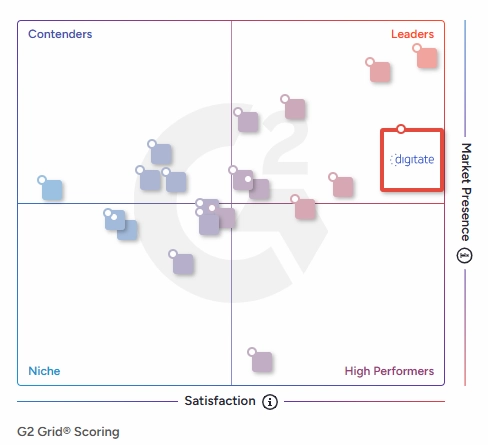
Digitate Named a Leader in AIOps — Worldwide
Discover why IDC recognized Digitate as a Leader in AIOps. Get the full analyst report and see how ignio™ delivers unified observability & autonomous operations.
Download Report →

Digitate’s empowers organizations to transform their operations with intelligence, insights, and actions.
Redefining IT operations with AI and automation
Enabling predictable, Agile and Silent batch operations in a closed-loop solution
End-to-end automation for incidents and service requests in SAP
Autonomously detect, triage and remediate endpoint issues
AI-based analytics to improve Procure-to-Pay effectiveness
Transform software testing and speed up software release cycles
Digitate helps enterprises improve the resilience and agility of their IT and business operations with our SaaS–based platform.
ignio™, Digitate’s SaaS-based platform for autonomous operations, combines observability and AIOps capabilities to solve operational challenges
Autonomous IT Solutions for the Modern Industry
ignio’s AI agents, with their ability to perceive, reason, act, and learn deliver measurable business value and transform IT operations.
Discover what the top industry analysts have to say about Digitate
Explore Insights on Intelligent Automation from Digitate experts
Get Insights from the Forrester Total Economic Impact™ study on Digitate ignio
Learn how Digitate ignio helped transform the Walgreens Boots Alliance
Digitate ignio™ eBooks Provide Insights into Intelligent Automation
Discover the Capabilities of ignio™’s AI Solutions
Guides cover AIOps and SAP automation examples, use cases, and selection criteria
Discover ignio White papers and Point of view library
Explore our upcoming and recorded webinars & events
At Digitate, we’re committed to helping enterprise companies, realize autonomous operations.
We’re committed to helping enterprise companies realize autonomous operations
Explore the latest news and information about Digitate
Grow your business with our Elevate Partner program
Evolve your skills and get certified
Get in touch or request a demo

Digitate’s empowers organizations to transform their operations with intelligence, insights, and actions.
Redefining IT operations with AI and automation
Enabling predictable, Agile and Silent batch operations in a closed-loop solution
End-to-end automation for incidents and service requests in SAP
Autonomously detect, triage and remediate endpoint issues
AI-based analytics to improve Procure-to-Pay effectiveness
Transform software testing and speed up software release cycles
Digitate helps enterprises improve the resilience and agility of their IT and business operations with our SaaS–based platform.
ignio™, Digitate’s SaaS-based platform for autonomous operations, combines observability and AIOps capabilities to solve operational challenges
Autonomous IT Solutions for the Modern Industry
ignio’s AI agents, with their ability to perceive, reason, act, and learn deliver measurable business value and transform IT operations.
Discover what the top industry analysts have to say about Digitate
Explore Insights on Intelligent Automation from Digitate experts
Get Insights from the Forrester Total Economic Impact™ study on Digitate ignio
Learn how Digitate ignio helped transform the Walgreens Boots Alliance
Digitate ignio™ eBooks Provide Insights into Intelligent Automation
Discover the Capabilities of ignio™’s AI Solutions
Guides cover AIOps and SAP automation examples, use cases, and selection criteria
Discover ignio White papers and Point of view library
Explore our upcoming and recorded webinars & events
At Digitate, we’re committed to helping enterprise companies, realize autonomous operations.
We’re committed to helping enterprise companies realize autonomous operations
Explore the latest news and information about Digitate
Grow your business with our Elevate Partner program
Evolve your skills and get certified
Get in touch or request a demo